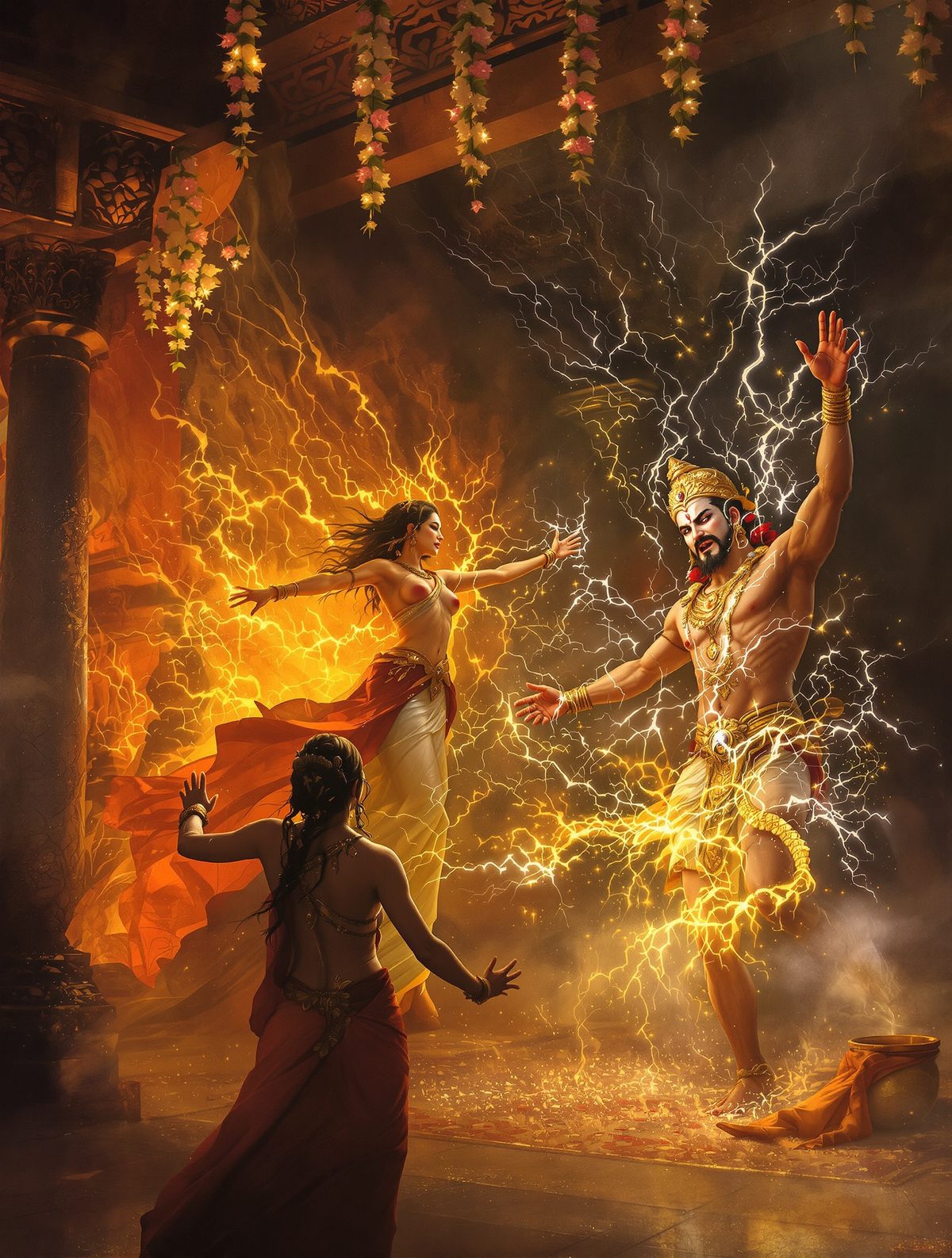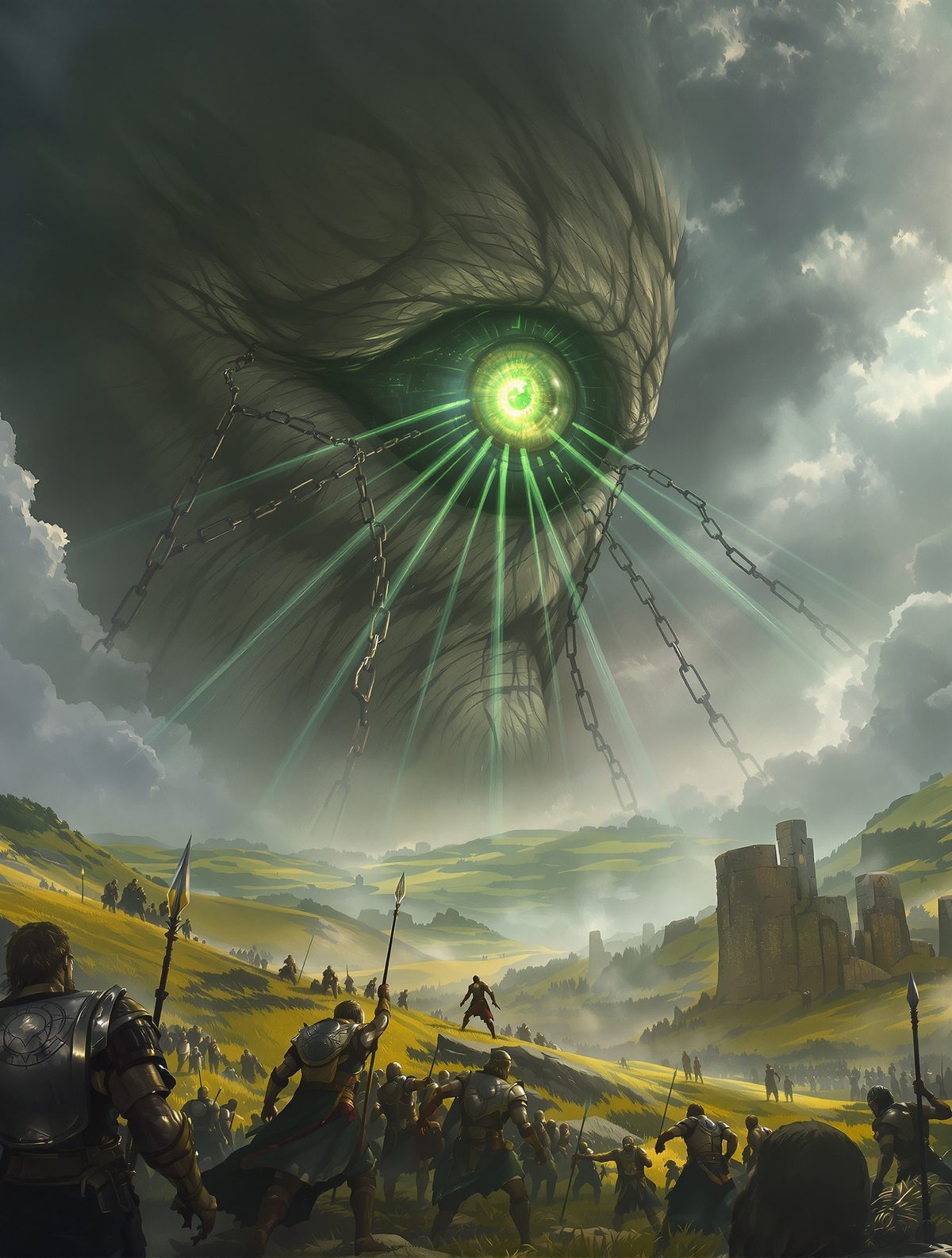
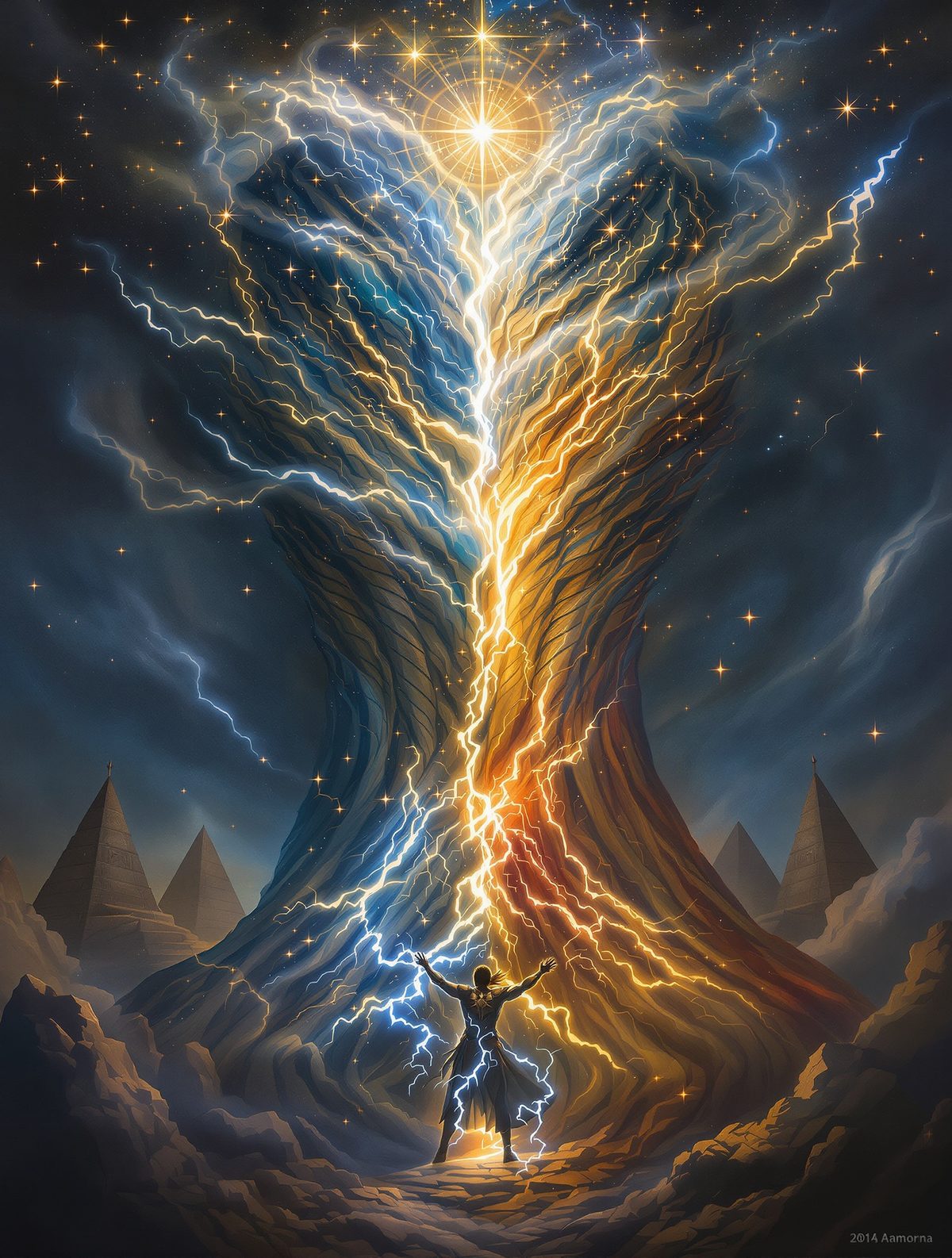
Picture this: the universe is nothing but primordial water stretching endlessly in all directions. No stars, no mountains, no breath of wind. Just the vast, serpentine body of Tiamat, the dragon queen whose coils encompass all of existence. Her eyes burn like dying suns in the cosmic darkness, and her breath is the very chaos from which all things emerge. But her reign of primordial terror is about to end—not through gradual change or peaceful succession, but through the most spectacular act of divine violence ever conceived by human imagination.
This isn't just any creation myth. This is the Enuma Elish, Babylon's answer to how the cosmos came to be, and it reads like the script for the ultimate cosmic horror movie. Recorded on seven clay tablets around 1100 BCE, this epic tale explains how our ordered universe was literally carved from the corpse of a chaos dragon by a young storm god with a bag of tricks that would make Thor jealous.
When the Waters Were One: The World Before Worlds
Long before the great ziggurats of Babylon pierced the sky, Mesopotamian storytellers gathered audiences around flickering fires to tell of the time when existence itself hung by a thread. In the beginning, they said, there were only two primordial beings: Apsu, the sweet waters beneath the earth, and Tiamat, the salt waters of chaos. These weren't mere bodies of water—they were living, breathing deities whose union gave birth to the first generation of gods.
But here's where things get interesting. Apsu and Tiamat weren't loving parents delighting in their divine offspring. According to the tablets discovered in the ruins of Ashurbanipal's library in Nineveh, these cosmic progenitors quickly grew irritated with their noisy, energetic children. Imagine trying to sleep while your kids throw the ultimate house party—except the house is the entire universe, and the kids are gods with the power to shake mountains.
Apsu's solution was characteristically paternal: he wanted to kill all the younger gods and restore peace. But the gods weren't about to go quietly into that good night. In a move that would make Game of Thrones look like a family sitcom, the wise god Ea murdered Apsu in his sleep and built his palace on the corpse of his father-in-law.
The Making of a Dragon Queen: Tiamat's Transformation
If you think losing a spouse might make someone a little cranky, imagine being a primordial chaos dragon whose husband gets murdered by your own children. Tiamat's grief transformed into something far more dangerous than mere anger—it became the fuel for cosmic war.
The tablets describe how Tiamat began birthing an army of monsters that sound like they escaped from humanity's darkest nightmares. We're talking about eleven creatures so terrifying that the Mesopotamians could barely find words to describe them: horned serpents, dragon-men, savage dogs, scorpion-men, and fish-men that combined the worst aspects of land and sea creatures. The text specifically mentions she created "roaring dragons" whose bodies she "filled with venom instead of blood."
But Tiamat's masterstroke wasn't just creating monsters—it was promoting her second husband, Kingu, to general of her army and giving him the Tablets of Destiny, artifacts that granted control over the fates of gods and mortals alike. Suddenly, the younger gods found themselves facing not just a grieving mother, but a cosmic warlord with the power to rewrite reality itself.
Enter the Storm God: Marduk's Unlikely Rise
Here's where our hero enters the stage, though calling Marduk an obvious choice for cosmic savior would be like calling Luke Skywalker an obvious choice to take down the Death Star. Among the pantheon of Mesopotamian deities, Marduk was relatively young and untested—the son of Ea, born in the freshwater palace built on Apsu's corpse.
But Marduk had something his elders lacked: innovation. While the older gods cowered before Tiamat's approaching army, Marduk studied the arts of war and weather. The tablets describe him as having four eyes and four ears—suggesting supernatural awareness—and flames that danced from his lips when he spoke. Most importantly, he could command the winds themselves, bending them to his will like a cosmic puppeteer.
The desperate gods made Marduk an offer he couldn't refuse: defeat Tiamat, and become king of all the gods. But first, they wanted proof of his power. So Marduk performed what might be history's first recorded magic trick—he made a constellation appear, then made it vanish, then brought it back again with nothing but the power of his word. The gods were convinced.
The Ultimate Cosmic Showdown: Wind, Net, and Dragon
What followed was a battle that makes every superhero movie look like a playground scuffle. Picture a cosmic arena where the very fabric of reality serves as the battlefield, and you're beginning to understand the scale of this confrontation.
Marduk came prepared with an arsenal that reads like a fantasy novel's weapons catalog: a bow and quiver of lightning bolts, a net woven from the four winds, a club that could shatter mountains, and most cleverly of all, a plan that exploited Tiamat's most basic biological function—breathing.
The tablets describe their meeting in language that still sends shivers down the spine: "When Tiamat heard this, she was like one possessed, she lost her reason. Tiamat uttered wild, savage cries, she trembled and shook to her very foundations." But her rage played directly into Marduk's hands.
As Tiamat opened her massive jaws to devour the young storm god, Marduk unleashed the four winds directly down her throat. The description that follows is both grotesque and brilliant: the winds inflated the chaos dragon like a cosmic balloon, stretching her body until she couldn't move, couldn't close her mouth, couldn't even think clearly. Then, with surgical precision, Marduk shot an arrow of lightning into her distended belly, piercing her heart and ending the reign of primordial chaos forever.
The Ultimate Act of Creation: Making Worlds from Dragon Parts
Now comes the part that transforms this from a simple good-versus-evil story into something far more profound—and unsettling. Most creation myths describe the world emerging from nothing, or from some act of divine will. The Enuma Elish is unflinchingly explicit: our entire universe is a butcher shop project.
After ensuring Tiamat was truly dead, Marduk began his work with the methodical precision of a cosmic surgeon. He split her corpse lengthwise like opening a shellfish, using one half to form the dome of the heavens and the other to create the foundation of the earth. Her eyes became the sources of the Tigris and Euphrates rivers—the very waters that would give life to Mesopotamian civilization. Her tail was twisted into the Milky Way, and her ribs became the supports that hold up the sky.
But Marduk wasn't finished. From the blood of Kingu, Tiamat's defeated general, he created humanity itself. The tablets are explicit about our purpose: humans were made to serve the gods, to perform the labor that would keep the cosmic order functioning. We are, in essence, descendants of chaos, created from the blood of a war criminal, designed to maintain the peace that our very existence threatens to disturb.
Why This Ancient Horror Story Still Matters
Four thousand years later, why should we care about a Babylonian tale of cosmic dragon-slaying? Because hidden within this ancient story are questions that still haunt us today: What is the price of order? Can civilization exist without violence? Are we the heroes of our own story, or merely the cleanup crew for conflicts we didn't start?
The Enuma Elish presents a universe where creation and destruction are inseparable, where progress demands the violent defeat of the old ways, and where even the gods must choose between chaos and control. When Marduk splits Tiamat's corpse to create the heavens and earth, he's doing more than just building a universe—he's establishing the principle that sometimes, to make something new and beautiful, you first have to destroy something ancient and powerful.
Every time we level a forest to build a city, every time we choose progress over preservation, every time we sacrifice the wild and unpredictable for the safe and controlled, we're reenacting Marduk's cosmic surgery. The dragon queen's corpse still surrounds us—we call it home, we call it sky, we call it civilization. And somewhere in the back of our minds, we wonder: what dreams did we kill to build this world, and do they ever threaten to wake up?