
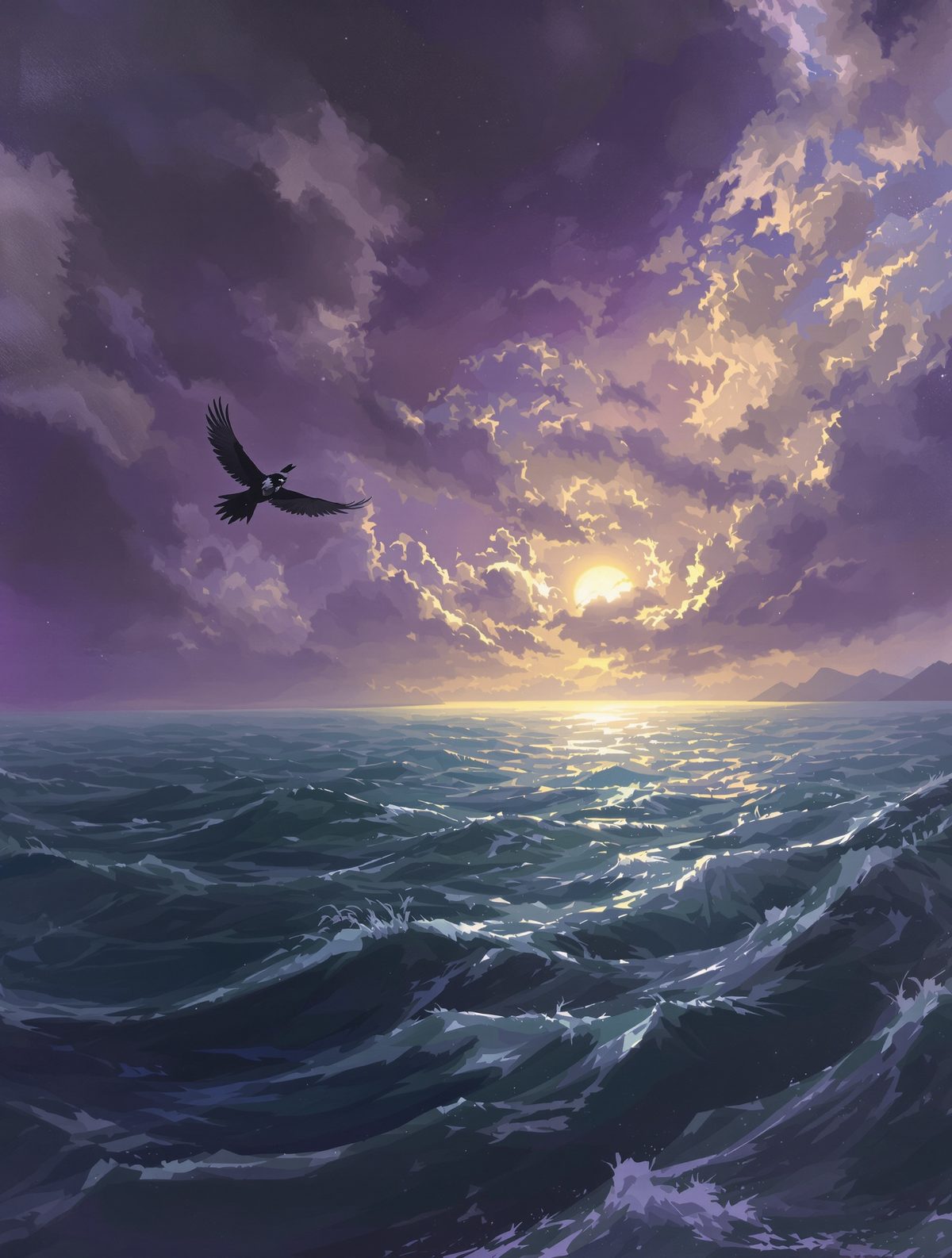
Imagine a calm day on the shores of the Eastern Sea, centuries ago in ancient China. The sun painted glorious streaks of orange across the horizon. But what looks serene and infinite is anything but benign. The waves might just be whispers of destiny, plotting their next victim. And then, in a moment, the daughter of the Sun God emerges, her life stolen by those very waters. Yet, her story was far from over.
The Tragic Tale of Calm Before the Storm
In the golden era of Chinese mythology, a tale emerges of an adventurous child, the youngest daughter of Emperor Yan, also known as Yandi, the Sun God. Her name was Nu Wa, a name that echoes through the ages with unfulfilled dreams and an indestructible resolve. It was a rare day off her father’s mountainous abode when she ventured down to the Eastern Sea, a vast expanse so daunting yet inviting.
She was a mere child, carefree and curious. The waters greeted her with gentle waves, reflecting the innocence and warmth of her spirit. But the sea, as it often does, concealed its wilder soul. The same waters that invited her played a treacherous game of fate. Before anyone could prophesy disaster, the Sea pulled Nu Wa into its depths, leaving not a ripple to betray the act.
Rebirth as Jing Wei: A Transformation Fueled by Purpose
In the silence of the aftermath, the Sun God grieved for his lost daughter. But in the symphony of nature, there is always a rebirth. From the vast abyss of tragedy, Nu Wa rose again, not as a ghost to haunt the past, but reborn as a tiny bird. She took on the name Jing Wei, a name that literally means 'to fearlessness defend,' echoing her vow against the thief that was the Eastern Sea.
Jing Wei was not any ordinary bird; she was a small creature of unyielding will. With her wings spread, she soared not for joy but for justice. Her mission was singular and simple: to fill the relentless sea that had taken her life. How she accomplished this was almost as extraordinary as her rebirth. Every day, armed with tenacity, she would carry small stones and twigs from the Western Mountains, doggedly dropping them into the roaring laughter of the ocean.
A Task That Defies Time: Stones Against the Tide
The legend of Jing Wei captures a unique bend in mythology, a child reborn not just to exist, but to carry forward a relentless struggle. The Western Mountains served as her sanctuary, offering the stones that became her arsenal in this infinite battle. Each pebble she carried was a token of defiance, each twig an extension of her undying spirit.
The sea was as vast as imagination allows, its waves laughing at her efforts, at the tiny pebbles disappearing into its depths. Anyone might ask, what use is a single stone against the infinite reach of the ocean? But in the narrative of Jing Wei, each stone was a declaration, a timeline that transcended conventional constraints. Her myth tells us of hundreds of years, of an unyielding commitment passed down generations, without pause.
The Unseen Spectacle: Nature’s Own Play of Persistence
As centuries unfolded, storytellers across China wove the tale of Jing Wei into vibrant folklore. But beyond stories heard round a flickering fire, there lies a deeper intrigue in Jing Wei’s actions—a perpetual battle, silent yet loud. How many birds would join her in her eternal pursuit, believing in ambition over admirable sense?
The entire ordeal takes on a representation of humanity’s struggle against insurmountable odds. Think of the Great Wall of China, forged stone by stone, echoing Jing Wei's laborious task of carving out proclamations of determination. The legends, Chinese and beyond, have always celebrated those whose actions defy logic, speaking to the spark of defiance within us all.
Why This Matters Today: The Timeless Cry of Jing Wei
Jing Wei's legend is etched into the consciousness of Chinese culture, a tale that transcends time. Her perseverance against the mighty sea becomes a powerful allegory, one that continues to resonate across epochs and boundaries. It serves as a symbol of resilience, urging us never to bow to overwhelming adversity—an echo that beckons the energies of those who dare to make small actions that ripple into monumental changes.
Our tumultuous world today offers its own version of vast seas, whether through personal struggles or global challenges. The legend of Jing Wei reminds us that purpose furnishes us with wings, even if the task appears unimaginable. Her myth, both enchanting and humbling, is a beacon for spirits unfettered by the enormity of their aspirations.
Though the stones of Jing Wei may never fill the Eastern Sea, they leave a legacy of persistence—a reminder to face our own oceans, relentless and untiring, one stone, one act at a time. With such resolve, the world need never fear that history's legends will be left out of textbooks; they carve their place in the lasting chronicles of humanity itself.