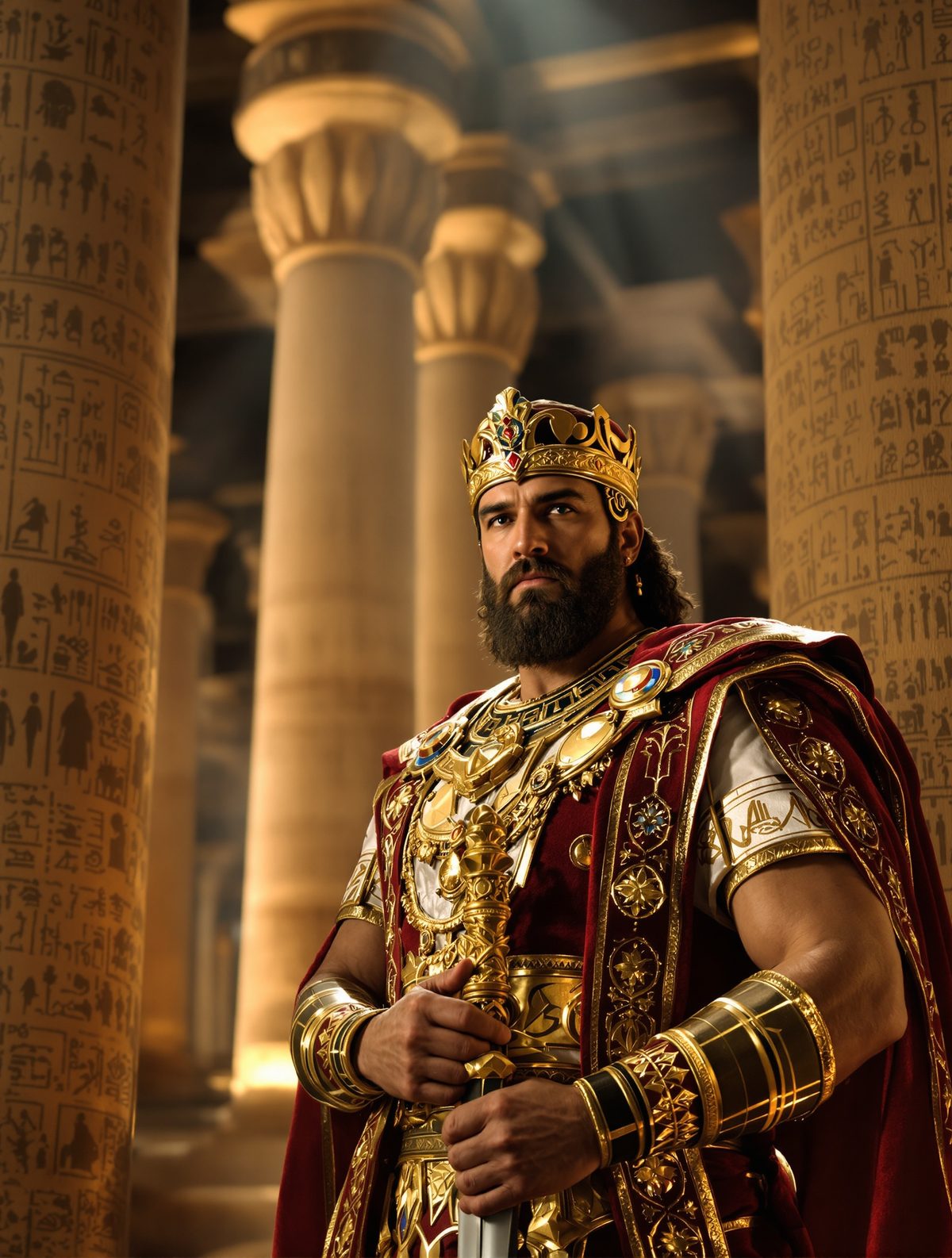
The palace walls echoed with screams and the clash of steel as Emperor Caligula's blood pooled on the marble floors of his underground passageway. It was January 24th, 41 AD, and Rome's most notorious tyrant had finally met his end at the hands of his own Praetorian Guards. But as the assassins wiped their blades clean, they faced an unexpected problem: they had just murdered the most powerful man in the world, and now they needed to find someone to replace him—fast.
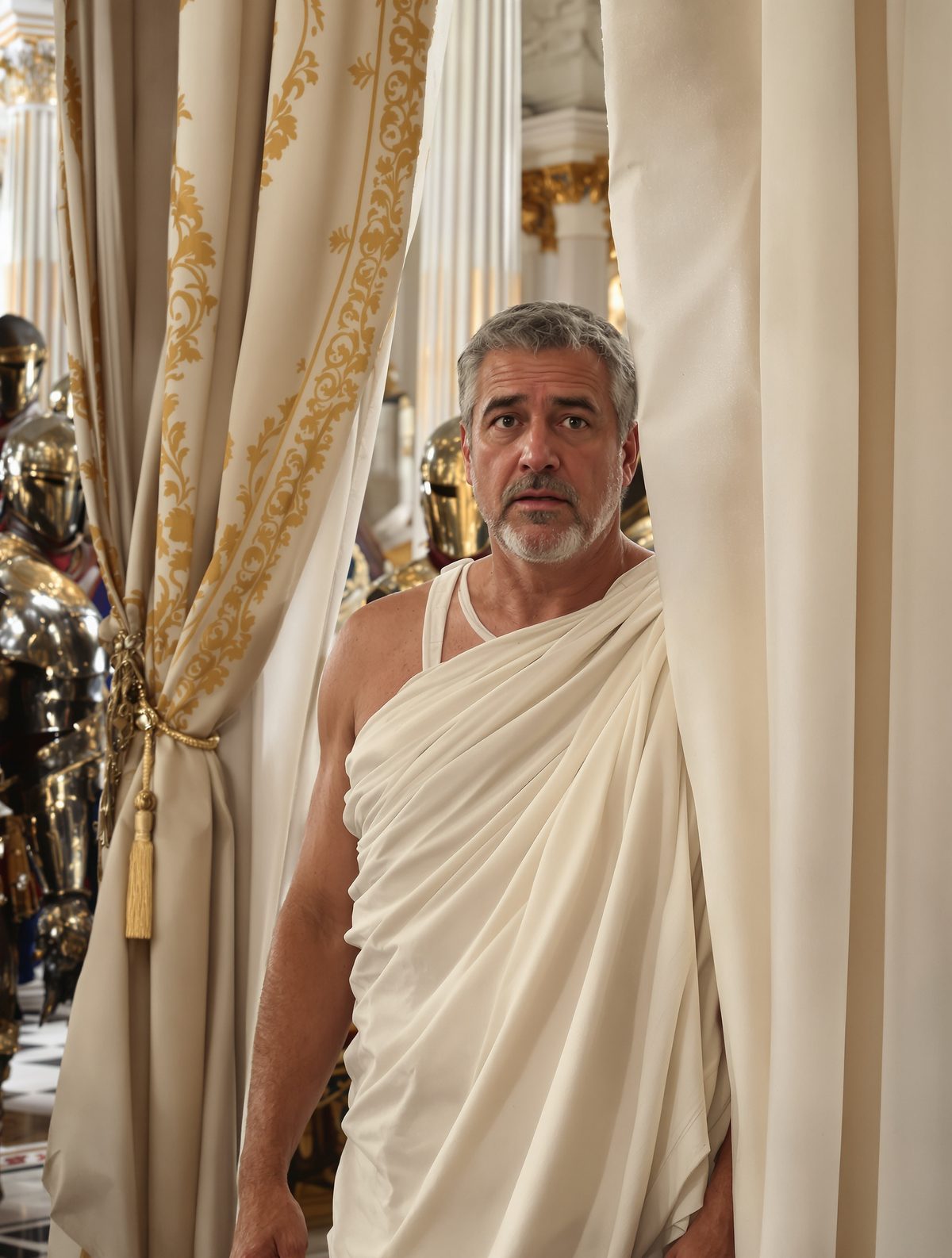
Hidden behind a curtain in the chaos, a fifty-year-old man with a pronounced limp and a terrible stammer pressed himself against the cold stone wall, praying the gods would make him invisible. Tiberius Claudius Caesar Augustus Germanicus—known simply as Claudius—had spent his entire life being overlooked, dismissed, and pitied by his own family. He was the nephew emperors ignored, the uncle who shuffled through palace corridors with his head in his scrolls, writing histories of civilizations long dead while the living empire swirled around him.
He never could have imagined that in the next few minutes, those same qualities that made him a family embarrassment would make him the most logical choice to rule the known world.
The Scholar Nobody Expected
To understand how Claudius became emperor, you first have to understand how spectacularly unfit for power everyone thought he was. Born in 10 BC with what modern doctors suspect was cerebral palsy or possibly polio, Claudius limped, drooled slightly, and had a stammer that made public speaking—a crucial Roman skill—nearly impossible. His own mother, Antonia, called him "a monster of a man, not finished by Nature but only begun."
While his brother Germanicus became Rome's golden boy general and his nephew Caligula charmed his way into Augustus's favor, Claudius retreated into books. He wrote histories of the Etruscans, the Carthaginians, and the Civil Wars—forty-three volumes in total, though sadly none survive today. The great historian Livy took him under his wing, and Claudius became something rare in imperial Rome: a genuine intellectual who cared more about the past than politics.
This scholarly obsession probably saved his life. When Caligula's paranoia reached fever pitch and he began executing family members for imagined slights, he left his harmless uncle alone. After all, what threat could a limping historian pose to an emperor who declared himself a living god and made his horse a consul?
Death Comes for Caesar
By 41 AD, Caligula had pushed Rome to the breaking point. He had drained the treasury with his excesses, humiliated the Senate, and terrorized even his closest allies. The emperor who once fed criminals to wild animals for entertainment had made too many enemies, and a conspiracy formed around Cassius Chaerea, a Praetorian tribune whom Caligula had repeatedly humiliated with crude jokes about his supposed effeminacy.
On that fateful January morning, as Caligula made his way through the underground passages beneath the palace after watching some theatrical games, the conspirators struck. Chaerea delivered the first blow, followed by at least thirty other wounds from the frenzied attackers. They didn't stop there—they murdered Caligula's wife Caesonia and dashed his infant daughter's brains against a wall, determined to end his bloodline completely.
The palace erupted into chaos. Guards ran through corridors, senators fled for their lives, and in the confusion, nobody quite knew what came next. The conspirators had succeeded in killing the tyrant, but they hadn't planned for what would follow. Some senators spoke wildly of restoring the old Republic, while others worried about civil war breaking out across the empire.
The Accidental Discovery
As the palace guards searched room by room, clearing out potential threats and looking for survivors, a sharp-eyed Praetorian noticed something odd about a curtain in one of the corridors. A pair of feet were visible beneath the heavy fabric. When they yanked the curtain aside, they found Claudius—trembling, stammering, and convinced his final moment had arrived.
Here's where the story takes its most remarkable turn. Instead of killing him, the guards fell to their knees. These practical soldiers had just witnessed the chaos that follows the sudden death of an emperor, and they knew Rome needed stability above all else. The Senate might dream of restoring the Republic, but the Praetorian Guard knew that their power—and their generous imperial salaries—depended on having an emperor.
Claudius was perfect for their purposes: he was a member of the Julio-Claudian dynasty, giving him legitimate claim to power, but he was also weak enough that they believed they could control him. Most importantly, he was there, trembling behind a curtain while other potential claimants were miles away. Sometimes history turns on nothing more than proximity and timing.
From Trembling to Triumph
The man who had spent his life avoiding the spotlight suddenly found himself carried on the shoulders of Praetorian Guards to their camp, where they proclaimed him Emperor of Rome. Ancient sources tell us that Claudius was terrified, certain this was an elaborate setup for his execution. He had good reason to be afraid—in the twelve hours following Caligula's assassination, the Senate had indeed debated restoring the Republic and abolishing the imperial system entirely.
But the Praetorians had made their choice, and they backed it up with steel. They surrounded the Senate house with armed soldiers while their representatives "negotiated" with the senators. The message was clear: Claudius would be emperor, or there would be civil war. Faced with this reality, the Senate grudgingly confirmed his appointment on January 25th, 41 AD.
To secure his position, Claudius made a shrewd move that would set a dangerous precedent for future emperors: he promised each Praetorian Guard a bonus of 15,000 sesterces—nearly five years' pay for an ordinary soldier. It was the first recorded instance of an emperor essentially buying the loyalty of his guards, a practice that would later contribute to the crisis of imperial succession in later centuries.
The Unlikely Success
What happened next surprised everyone, perhaps including Claudius himself. The man dismissed as an embarrassment proved to be one of Rome's most capable administrators. His decades of historical research had given him an encyclopedic knowledge of Roman law, precedent, and government that served him well as emperor.
Claudius expanded the empire more than any emperor since Augustus, conquering Britain in 43 AD and adding Thrace, Lycia, and parts of Mauritania to Roman territory. He undertook massive public works projects, including new aqueducts and the draining of Lake Fucinus. He granted citizenship to people throughout the provinces and reformed the legal system with the careful attention to detail of a natural scholar.
Perhaps most remarkably for someone who had accidentally stumbled into power, he proved surprisingly ruthless when necessary. He executed thirty-five senators and over 300 knights for treason, showing that the trembling man behind the curtain had learned the hard lessons of imperial survival.
The Lesson Behind the Curtain
Claudius ruled for thirteen years until his death in 54 AD (possibly by poison, administered by his wife Agrippina to secure power for her son Nero). His reign demonstrates one of history's most fascinating paradoxes: sometimes the people who seek power least are the ones best equipped to wield it wisely.
The stammering scholar who hid behind palace curtains became an emperor who expanded Roman citizenship, conquered new territories, and left the empire stronger than he found it. His story reminds us that history often turns on the most unexpected moments—a curtain that didn't quite reach the floor, guards pragmatic enough to see opportunity in an unlikely candidate, and a frightened intellectual who discovered he had the strength to rule the world.
In our modern age of professional politicians and lifelong power-seekers, there's something almost refreshing about Claudius—the reluctant leader who stumbled into greatness not because he craved authority, but because circumstances forced him to rise to the occasion. Sometimes the best leaders are those who understand the weight of power precisely because they never wanted to carry it.