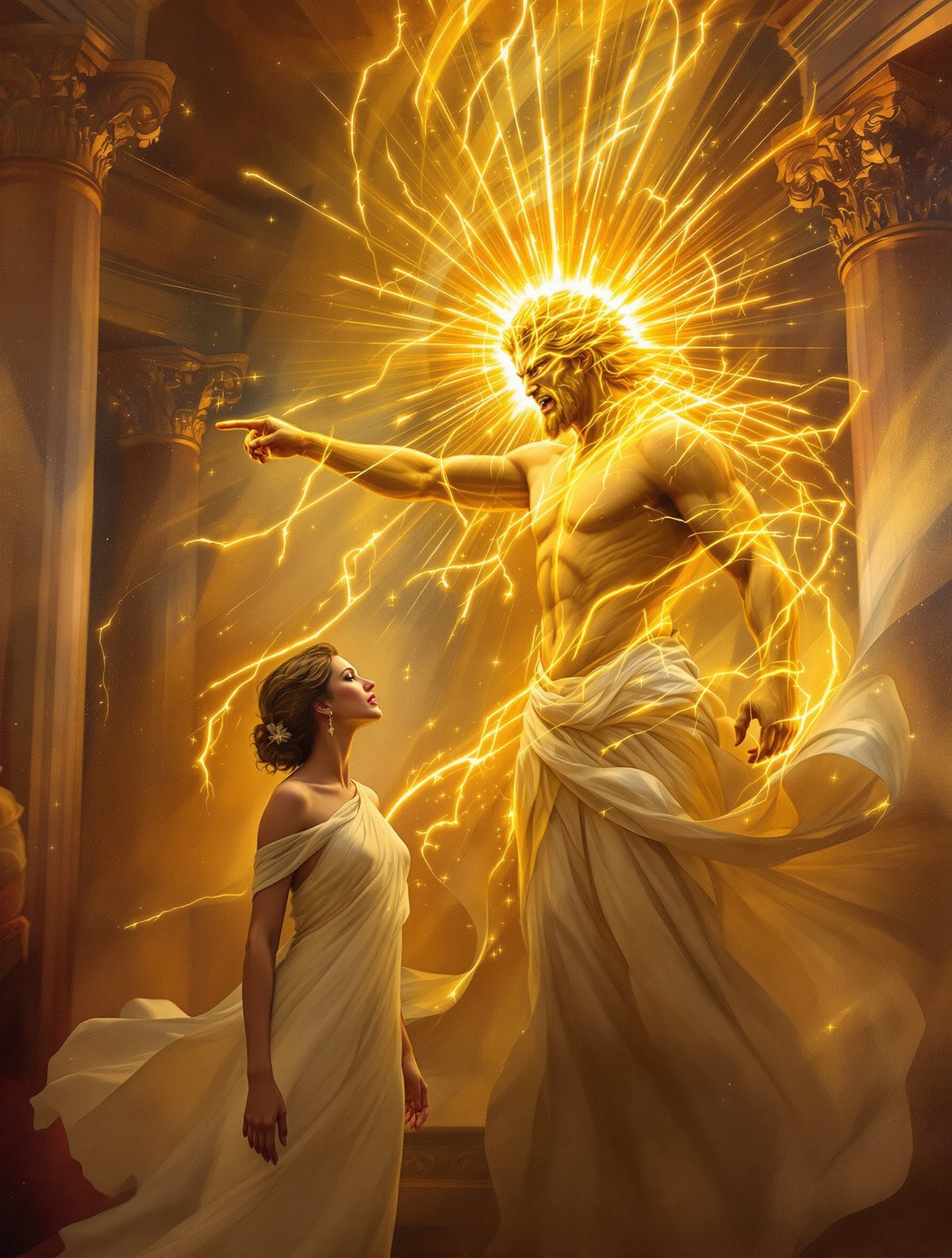
Picture this: you're offered the power to see the future by a god himself. You could prevent disasters, save lives, change the course of history. There's just one catch—you have to sleep with him first. You take the gift, then refuse the god's advances. Clever, right? Now imagine that same god, burning with divine rage, ensuring that every prophecy you speak will be dismissed as the ravings of a madwoman. Welcome to the nightmare of Cassandra, the Trojan princess who thought she could outsmart Apollo—and paid the ultimate price.
In the blood-soaked annals of Greek mythology, few curses cut as deeply as the one that transformed Cassandra's divine blessing into an eternal torment. Her story isn't just about divine revenge—it's about the weaponization of disbelief, making truth itself the cruelest punishment imaginable.
The Princess Who Caught a God's Eye
Cassandra was no ordinary princess lounging in the marble halls of Troy. Born to King Priam and Queen Hecuba around the time Troy was reaching its legendary zenith, she was renowned throughout the ancient world for her stunning beauty and sharp intellect. Ancient sources describe her as having flowing dark hair that caught the light like polished obsidian and eyes that seemed to hold depths of wisdom beyond her years.
But beauty in the ancient world was often a dangerous gift, especially when it attracted the attention of the gods. Apollo, the golden-haired god of prophecy, music, and the sun, became utterly obsessed with the Trojan princess. Unlike his usual conquests, Cassandra presented a challenge that inflamed his divine desire even more intensely.
What made Cassandra truly remarkable wasn't just her looks—it was her fierce independence and razor-sharp mind. In an era when women, even royal ones, had little agency over their own lives, Cassandra had cultivated a reputation for being untouchable, spurning suitor after suitor with cutting wit and unwavering resolve.
The Devil's Bargain in Apollo's Temple
The encounter that would seal Cassandra's fate took place in Apollo's sacred temple in Troy, a magnificent structure with columns that gleamed like captured sunlight. According to the most detailed accounts, Apollo appeared to Cassandra not in his full divine glory—which would have been fatal to behold—but in the form of an impossibly beautiful young man with golden skin that seemed to radiate warmth.
"I can give you something no mortal has ever possessed," he whispered, his voice carrying the harmonies of celestial music. "The gift of perfect prophecy. You will see the threads of fate themselves, witness events before they unfold, possess knowledge that could save kingdoms."
The offer was intoxicating. In the Bronze Age world of around 1200 BCE, when Troy stood as one of the most powerful cities in the known world, such knowledge would make someone the most valuable person alive. Rulers would pay fortunes for glimpses of the future. Wars could be avoided, disasters prevented, prosperity ensured.
But Apollo's price was clear: Cassandra's love, her body, her complete submission to his desires. Here's where the traditional stories often get fuzzy, but the most compelling ancient sources suggest that Cassandra agreed to the bargain, underwent the sacred ritual that bound Apollo's prophetic power to her mortal soul—and then, in a moment that would echo through eternity, she looked the god in the eye and said no.
The Curse That Broke Reality
Apollo's rage was nuclear. The ancient Greeks understood that divine wrath operated on a completely different scale from human anger—it was cosmic, eternal, and devastatingly creative. But here's the fascinating detail most people don't know: according to divine law, Apollo couldn't simply revoke a gift once it had been properly bestowed. The ritual was complete, the power transferred. Cassandra legally owned her prophetic abilities.
So Apollo did something far worse. In a moment of brilliant, cruel inspiration, he leaned close to Cassandra and breathed his curse directly onto her lips: she would retain every ounce of her prophetic power, but no one would ever believe a word she said. Not her family, not her friends, not even when her prophecies could save their lives.
The curse was surgical in its precision. Cassandra could see the future with perfect clarity—every detail, every consequence, every tragedy that could be prevented. But when she spoke, her words would sound like madness to every ear that heard them. The more urgent and important her warnings, the more people would dismiss her as a raving lunatic.
Imagine knowing exactly when and how your city will fall, which of your brothers will die in battle, which wooden horse contains enemy soldiers—and having everyone you love look at you with pity and frustration when you try to save them.
The Prophesies That Could Have Changed Everything
Cassandra's torment played out on history's greatest stage: the Trojan War. For ten brutal years, she watched the conflict unfold exactly as her visions had shown her, powerless to change anything despite knowing every detail in advance.
When Paris first set sail for Sparta, Cassandra saw Helen's abduction and the catastrophic war it would trigger. She screamed warnings to her father King Priam, predicting the thousands who would die, the city that would burn, the civilization that would crumble. Priam patted her head and told his advisors she'd been having nightmares again.
When the Greeks appeared to retreat, leaving behind their famous wooden horse, Cassandra saw the soldiers hidden inside with crystal clarity. She ran through Troy's streets, tearing at her hair, screaming that the horse would be their doom. The Trojans celebrated their "victory" while dragging their own destruction inside the city walls.
The most heartbreaking detail? Ancient sources suggest that deep down, some people—especially her family—sensed she might be telling the truth. But Apollo's curse was so powerful that even when logic suggested listening to her, they found themselves physically unable to believe her words.
The Ultimate Price of Divine Revenge
Cassandra's final prophecy came as Troy burned around her. She foresaw her own death at the hands of Clytemnestra, Queen Agamemnon's vengeful wife, after being dragged back to Greece as a war prize. Even facing her own murder, she tried one last time to warn people about the cycle of revenge that would consume the House of Atreus for generations.
They thought she was having another episode.
What makes Cassandra's curse particularly cruel is how it isolated her from human connection itself. Truth-telling is fundamental to relationships, but she could never share her most important thoughts without being dismissed as insane. She died alone with her terrible knowledge, surrounded by people who saw her as nothing more than a mad prophet babbling about impossible futures.
The Modern Cassandra Complex
Cassandra's story resonates today because we live in an age drowning in information yet starving for truth. Scientists warning about climate change, experts predicting economic crashes, whistleblowers exposing corruption—they all face their own versions of Apollo's curse, speaking truths that people find too uncomfortable to believe.
The psychological term "Cassandra Complex" describes the frustration of those who see disaster approaching but cannot convince others to take action. Like the original Cassandra, they watch helplessly as preventable tragedies unfold exactly as predicted.
Perhaps the most chilling aspect of Cassandra's curse is how it weaponized disbelief itself. In our current era of "alternative facts" and information warfare, her story feels less like ancient mythology and more like a warning about the dangers of living in a world where truth becomes just another opinion. When prophecy becomes indistinguishable from madness, everyone loses—even the gods.