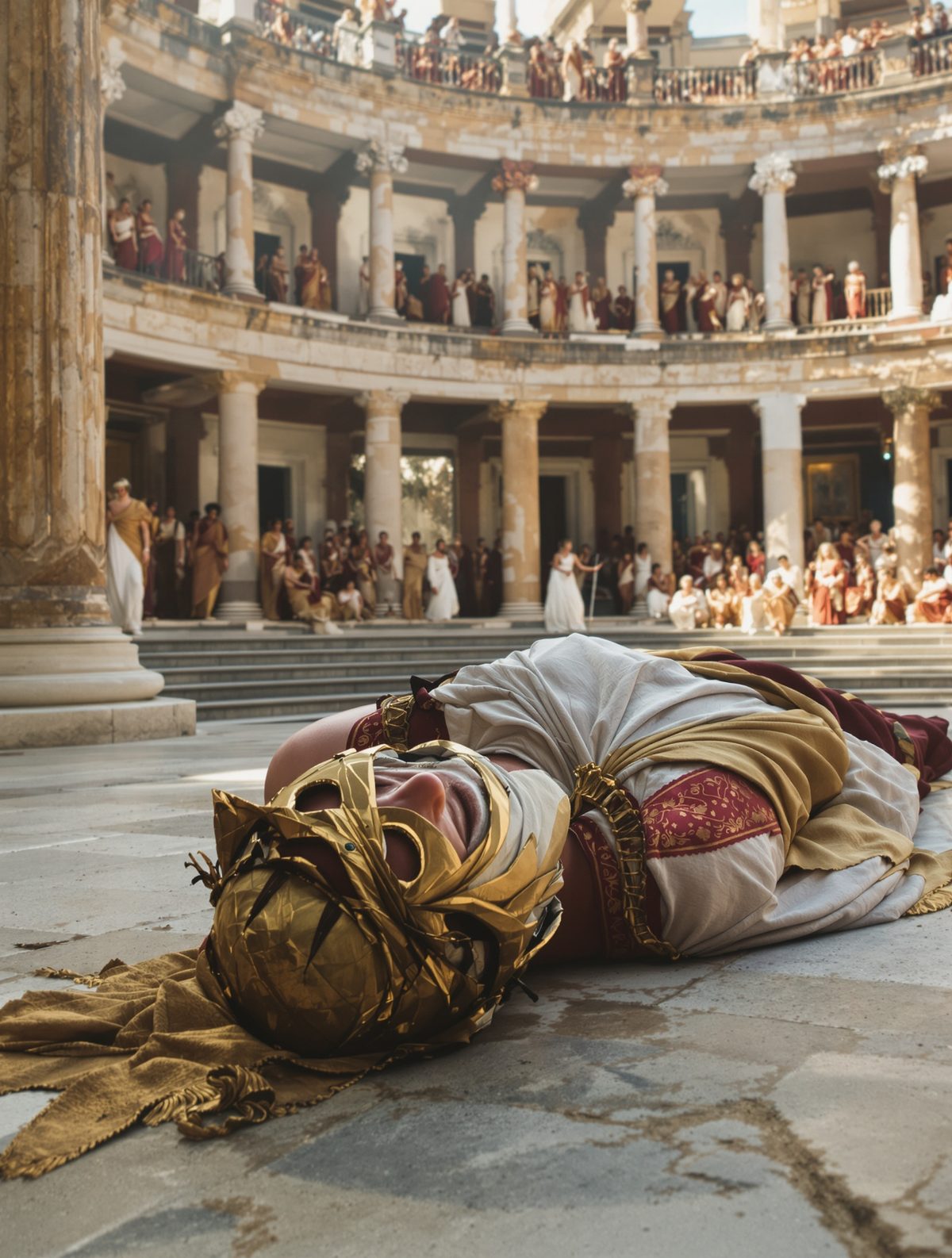
The parchment nailed to the wooden post outside Constantinople's Great Palace fluttered in the autumn breeze of 960 AD, its message written in both Greek and runic Norse. To most passersby in the bustling Byzantine capital, it seemed like the desperate act of a madman: "I am Bjorn Ironside of Birka. I am dying by poison unknown. One hundred silver marks to any soul who can name my killer before I draw my last breath."
What the curious crowds gathering around that notice didn't know was that they were witnessing one of history's most twisted tales of greed, guilt, and cosmic justice—a story that would echo through the taverns and trading houses of the medieval world for generations to come.
The Merchant Prince of the Northern Seas
Bjorn Ironside wasn't your typical Viking. While his namesake—the legendary son of Ragnar Lothbrok—had earned fame through raids and conquest, this Bjorn had built his fortune through something far more civilized: commerce. By 960 AD, he had become one of the wealthiest Norse merchants operating along the Austrvegr—the Eastern Route that connected Scandinavia to the riches of Byzantium.
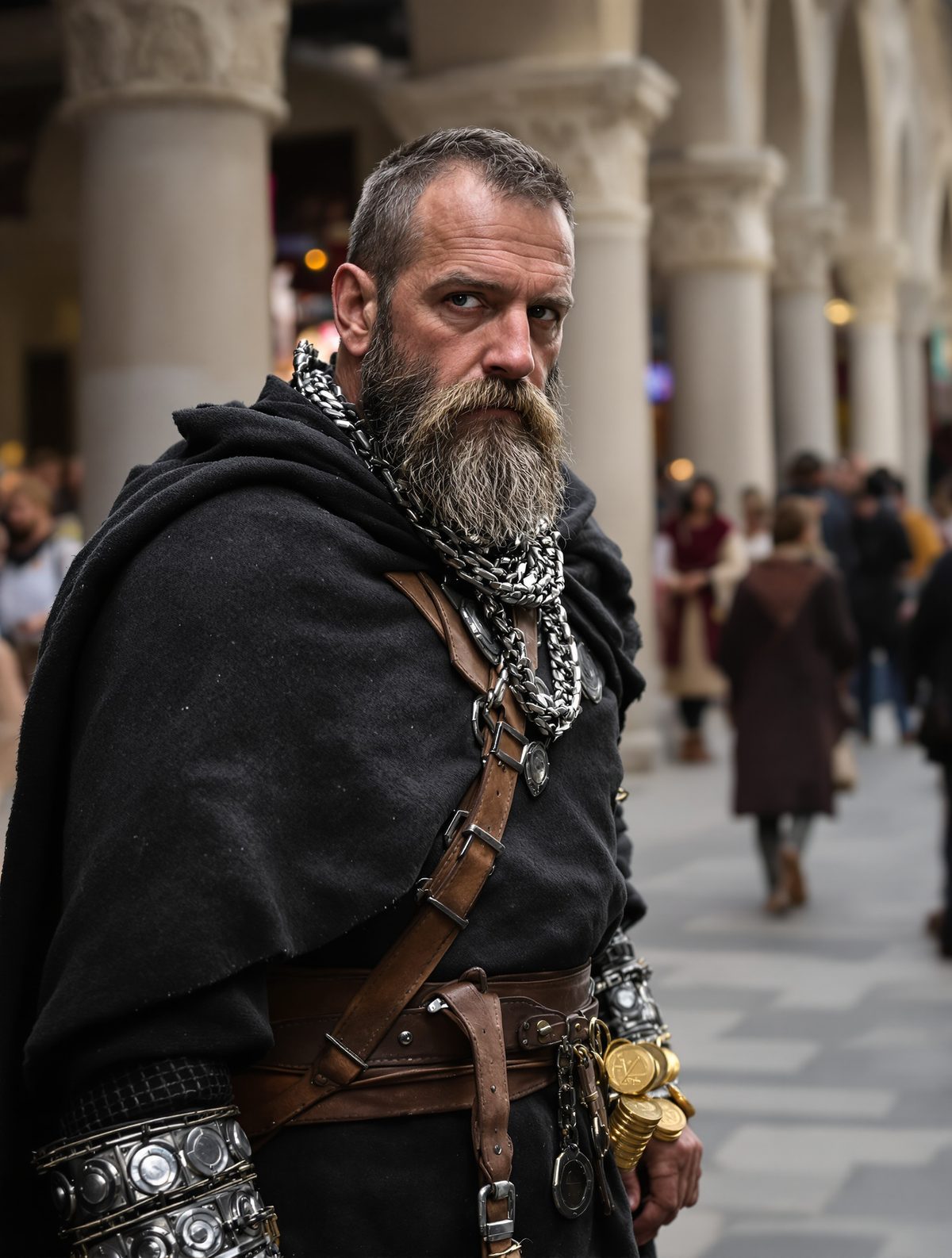
Standing nearly six and a half feet tall with arms thick as ship's masts, Bjorn cut an imposing figure in Constantinople's markets. His silver-threaded beard and the intricate Thor's hammer pendant hanging from his neck marked him immediately as a Northman, but his fluent Greek and shrewd business sense had earned him respect among the Byzantine merchant class. He dealt in amber from the Baltic, furs from the far reaches of Gardariki (modern-day Russia), and most lucratively, slaves captured in raids throughout Eastern Europe.
But Bjorn's true genius lay in his understanding of currency exchange. The silver dirham coins flowing from the Islamic world, Byzantine gold solidi, and various Scandinavian hack-silver all passed through his counting house. Contemporary Arab chronicler Ibrahim ibn Yaqub would later write that Bjorn "possessed the cunning of a Greek banker trapped in the body of a Norse berserker."
Three Days of Agony in the Queen of Cities
On October 15th, 960 AD, Bjorn began experiencing what he initially dismissed as a bad case of Byzantine belly—the traveler's curse that afflicted many foreign visitors to Constantinople's exotic cuisine. But as hours turned to days, his condition worsened dramatically. His vision blurred, his hands trembled uncontrollably, and a burning sensation spread through his gut like liquid fire.
The symptoms were unmistakable to anyone familiar with the era's favorite method of discrete murder: mercury poisoning. Known to Byzantine assassins as "the philosopher's death" for its slow, agonizing progression, mercury had become the poison of choice among Constantinople's more sophisticated killers. Mixed into wine, it was virtually tasteless and could take days to complete its deadly work.
As Bjorn's strength ebbed, his mind remained sharp enough to realize the terrible truth: someone had murdered him, and they had done it slowly, methodically, probably while sharing drinks and conducting business. But who? In a city of nearly 400,000 souls, where he conducted dozens of transactions daily, the possibilities were endless.
It was then that the dying Viking made a decision that would puzzle historians for centuries. Rather than rage against his fate or spend his final hours dictating messages to loved ones back in Birka, Bjorn chose to turn his death into his final business transaction.
The Bounty That Shook Byzantium
One hundred silver marks represented roughly fifteen years' wages for a skilled craftsman in 960 AD Constantinople. It was enough to buy a substantial house in the city's merchant quarter, or outfit three trading expeditions to the Black Sea. For context, the entire yearly tax revenue from some smaller Byzantine themes (administrative districts) didn't exceed two hundred marks.
Word of the bounty spread through Constantinople like wildfire. Tavern keepers whispered about it over their morning wine. Dock workers discussed it as they unloaded ships from across the known world. Even the city's beggars and street children kept their ears open, hoping to catch some scrap of information that might make them rich beyond their wildest dreams.
The authorities initially tried to maintain order, but Byzantine law had no precedent for such a situation. Was this a legitimate contract? Could a dying man legally bind his estate to such an unusual obligation? The city's legal scholars debated furiously while Bjorn continued his very public death vigil in a rented room above Stavros the Goldsmith's shop, just a stone's throw from the Hagia Sophia.
Professional informants emerged from Constantinople's shadowy underworld. Spurned business partners were accused. Rival merchants found themselves under suspicion. The city's substantial Norse expatriate community began eyeing each other with newfound wariness. Several fights broke out in the Scandinavian quarter as accusations flew and old grudges resurfaced.
The Confession That Defied Belief
On the morning of October 18th, as Bjorn lay barely conscious and clearly approaching his final hours, an unexpected visitor climbed the narrow stairs to his death chamber. Georgios Kantakouzenos was a prosperous Byzantine spice merchant who had dealt with Bjorn on numerous occasions. A man of middling height with soft hands and intelligent eyes, he hardly seemed the type capable of cold-blooded murder.
What happened next was witnessed by Father Methodios, the Orthodox priest attending Bjorn's final hours, and recorded in the priest's personal journal—one of the few contemporary accounts of these events to survive. According to Father Methodios, Kantakouzenos approached the dying Viking's bedside and spoke in clear, measured tones:
"Bjorn Ironside, I claim your bounty. I can name your killer because I am your killer. Three days ago, when we shared wine to celebrate our transaction for the Crimean furs, I added quicksilver to your cup. I needed the forty marks you demanded, and I decided taking your life was preferable to accepting such unfavorable terms."
The priest reported that Bjorn, despite his weakened state, managed a laugh that turned into a coughing fit. With tremendous effort, the dying Viking gestured for his strongbox and instructed that the promised silver be counted out immediately. But there was one final, sardonic twist to his unusual contract.
The Price of Confession
As Kantakouzenos greedily watched the silver marks being stacked before him, Bjorn summoned the last of his strength for one final business transaction. In a voice barely above a whisper, he informed the Byzantine merchant that by confessing to murder, he had simultaneously earned the bounty and signed his own death warrant.
Under both Byzantine law and the unwritten codes of Constantinople's international merchant community, Kantakouzenos had just publicly confessed to murder in front of a witness. More damning still, his confession revealed the calculated, premeditated nature of his crime—this wasn't a crime of passion but a business decision to commit murder rather than accept a financial loss.
The priest's journal records that Kantakouzenos went pale as the implications sank in. He had indeed won the hundred marks, but he would likely face execution within the week. The silver that should have solved his financial problems would now serve as evidence of his guilt when the authorities arrived.
According to Byzantine court records discovered in the 19th century, Georgios Kantakouzenos was executed by hanging on October 25th, 960 AD, exactly one week after claiming his fatal bounty. The hundred silver marks were confiscated by the imperial treasury, though twenty marks were set aside to pay for masses for Bjorn's soul.
The Echo Across Centuries
The strange tale of Bjorn Ironside's death bounty became legendary throughout the medieval trading world, passed down through generations of merchants, sailors, and storytellers. But beyond its value as a cautionary tale about greed and justice, the story illuminates something profound about human nature and the power of conscience.
In our modern world of surveillance cameras and forensic science, we might wonder why Kantakouzenos confessed to a crime he could have gotten away with. The answer lies in the psychology of guilt and the irresistible lure of profit. Faced with the opportunity to gain wealth from the very crime he had committed, the Byzantine merchant couldn't resist the twisted symmetry of profiting from his victim's death—even at the cost of his own life.
Perhaps most remarkably, Bjorn Ironside achieved something that eluded the justice systems of his time: he solved his own murder and ensured his killer faced punishment, all while maintaining his reputation as the shrewdest businessman in Constantinople. Even in death, the Viking merchant had negotiated the deal of a lifetime.