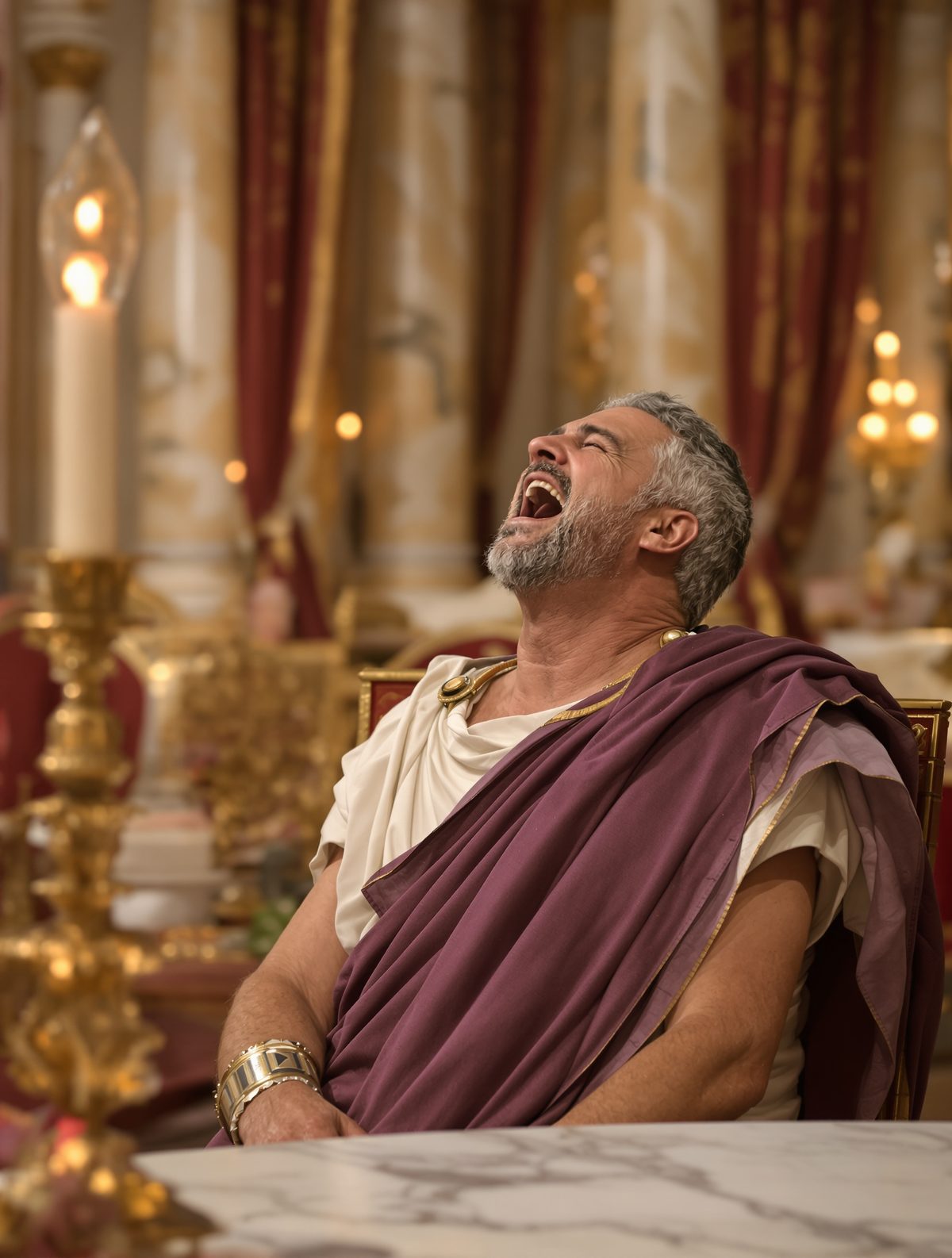
Picture this: it's October 1324, and the streets of Cairo are buzzing with excitement. Word has spread like wildfire through the markets and mosques that the wealthiest man in the world has arrived for his pilgrimage to Mecca. Mansa Musa, ruler of the Mali Empire, has brought a caravan so laden with gold that witnesses would speak of it for generations. But what the chroniclers barely mentioned—and what history nearly forgot—was the young woman riding beside him whose three days of unprecedented generosity would bring an entire nation to its economic knees.
Princess Fatima, Mansa Musa's teenage niece, was about to prove that sometimes the most destructive force in economics isn't greed—it's kindness without limits.
The Golden Caravan That Shook the Medieval World
When Mansa Musa's procession entered Cairo, it was unlike anything the cosmopolitan city had ever witnessed. The caravan stretched for miles: 60,000 people including soldiers, merchants, servants, and holy men, plus 80 camels each carrying 300 pounds of gold dust. Contemporary Arab historian Al-Umari later wrote that the sight "dazzled the eyes and confounded the mind."
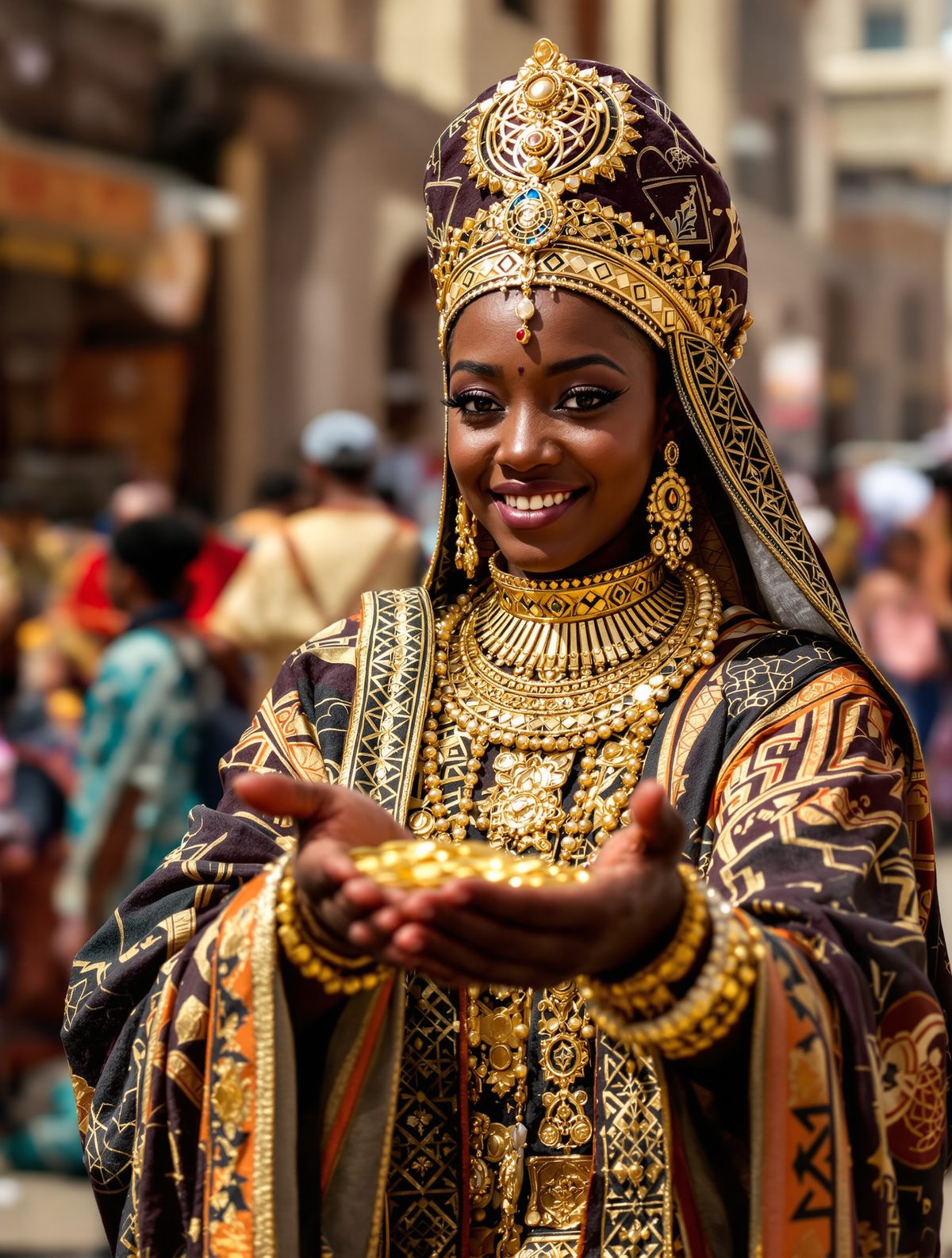
But nestled within this spectacular parade was Princess Fatima's own treasure train—twelve camels loaded exclusively with gold coins, jewelry, and precious ornaments. At just nineteen years old, she controlled wealth equivalent to roughly $400 million in today's currency. Unlike her uncle, who had carefully planned his charitable distributions as strategic diplomatic gifts, Fatima had no such political calculations in mind.
The princess had grown up in Niani, Mali's capital, where gold was so abundant that children played with nuggets in the streets. To her, the precious metal that drove international trade was simply a tool for helping people—a mindset that would prove catastrophically generous.
Three Days That Changed Everything
While Mansa Musa conducted formal meetings with Sultan Al-Nasir Muhammad and exchanged carefully measured gifts with Egyptian nobility, Princess Fatima took to the streets of Cairo with a very different agenda. What happened next reads like economic fiction, but multiple sources confirm the extraordinary reality.
On her first day, October 19th, Fatima distributed gold coins to every beggar she encountered in the Khan el-Khalili bazaar. Word spread instantly through Cairo's network of merchants and street vendors. By the second day, crowds of hundreds followed her everywhere, and she cheerfully handed out gold jewelry to anyone with a sob story—orphans, widows, struggling craftsmen, even relatively prosperous merchants who claimed hardship.
The third day was pure chaos. Contemporary accounts describe scenes that seem almost surreal: Princess Fatima standing in Cairo's central square, literally throwing handfuls of gold coins into crowds of thousands. Her servants begged her to stop, warning that her treasure was nearly exhausted, but she reportedly laughed and declared, "God provides more gold than we could ever need!"
By sunset on October 21st, Princess Fatima had given away an estimated 18,000 gold dinars—more wealth than most European kingdoms possessed in their entire treasuries.
When Gold Becomes Worthless
The economic impact was immediate and devastating. In medieval times, gold's value depended on its scarcity, and Cairo's money supply had just increased by roughly 20% in three days. Merchants who had accepted gold payments on Tuesday found their wealth cut in half by Friday.
The price of basic goods skyrocketed as sellers demanded more gold coins to compensate for the metal's plummeting value. A loaf of bread that cost one silver dirham on Monday required three silver dirhams by the following week—but now everyone had gold instead of silver, and no one wanted to trade silver for the suddenly abundant gold.
Even more bizarrely, beggars who had received Fatima's gifts found themselves temporarily wealthier than established merchants, creating a social upheaval that lasted months. Al-Umari recorded that "the social order turned upside down, with former paupers dining like kings while traders begged for credit."
The ripple effects spread beyond Egypt. Gold traders from as far as Constantinople and Venice, hearing news of Cairo's gold crash, temporarily suspended their Egyptian operations. International merchants began demanding silver or other currencies instead of gold, further destabilizing Egypt's position in Mediterranean trade networks.
The Desperate Damage Control
Realizing the catastrophic economic mess his niece had created, Mansa Musa attempted an unprecedented solution: he tried to buy back gold at above-market rates. For two weeks before continuing his pilgrimage, the Mali emperor sent agents throughout Cairo offering premium prices for gold, hoping to reduce the supply and restore the metal's value.
This desperate measure helped slightly but created new problems. Many of the beggars and common people who had received Fatima's gifts refused to sell, suspicious that this African king was trying to cheat them somehow. Others had already spent their gold on goods that were now worth far less than what they'd paid.
Princess Fatima herself, according to fragmentary accounts, seemed genuinely bewildered by the negative reaction to her generosity. Raised in a kingdom where gold was extracted from the earth faster than it could be spent, she reportedly asked her uncle, "If helping people creates problems, what is wealth for?"
It was a question that medieval economists couldn't answer—and one that still challenges us today.
The Twelve-Year Recovery
The numbers tell the story of Princess Fatima's unintended economic destruction. According to Mamluk financial records, it took twelve full years for gold prices in Cairo to return to pre-October 1324 levels. An entire generation of merchants saw their businesses collapse or struggle through more than a decade of currency instability.
The Egyptian government, under Sultan Al-Nasir Muhammad, was forced to implement emergency economic measures including temporary price controls and currency exchange regulations—some of the earliest documented examples of government intervention to address inflation in the medieval world.
Ironically, while Princess Fatima's actions devastated Cairo's economy, they inadvertently benefited other regions. As Egyptian gold flooded into international markets at reduced prices, kingdoms from Morocco to Syria experienced mild economic booms as their silver and copper currencies became relatively more valuable.
The recovery process fundamentally changed how medieval Islamic kingdoms approached monetary policy. Egypt began maintaining strategic reserves of multiple currencies and precious metals, a practice that eventually spread throughout the Islamic world.
The Princess Who Taught the World About Unintended Consequences
Princess Fatima's story disappeared from mainstream historical narratives for centuries, overshadowed by her uncle's more famous pilgrimage. But her three days of catastrophic kindness offer profound lessons for our modern world, where good intentions and economic reality often collide in unexpected ways.
Today, as governments and international organizations pour billions into aid programs, cryptocurrency valuations swing wildly based on supply changes, and well-meaning policies sometimes create the problems they aim to solve, Princess Fatima's medieval economic disaster feels strikingly contemporary.
Her story reminds us that in economics, as in physics, every action creates reactions—and sometimes the most generous hearts can create the most unintended chaos. In trying to help everyone, the princess from Mali accidentally hurt the very people she sought to aid, teaching us that good intentions, no matter how pure, cannot overcome the fundamental laws of supply, demand, and human nature.
Perhaps most remarkably, Princess Fatima achieved something that no conqueror had ever managed: she brought one of the medieval world's greatest cities to its knees not through violence or political intrigue, but through sheer, unstoppable generosity. In the annals of economic history, there may be no more unlikely villain—or more thought-provoking hero.