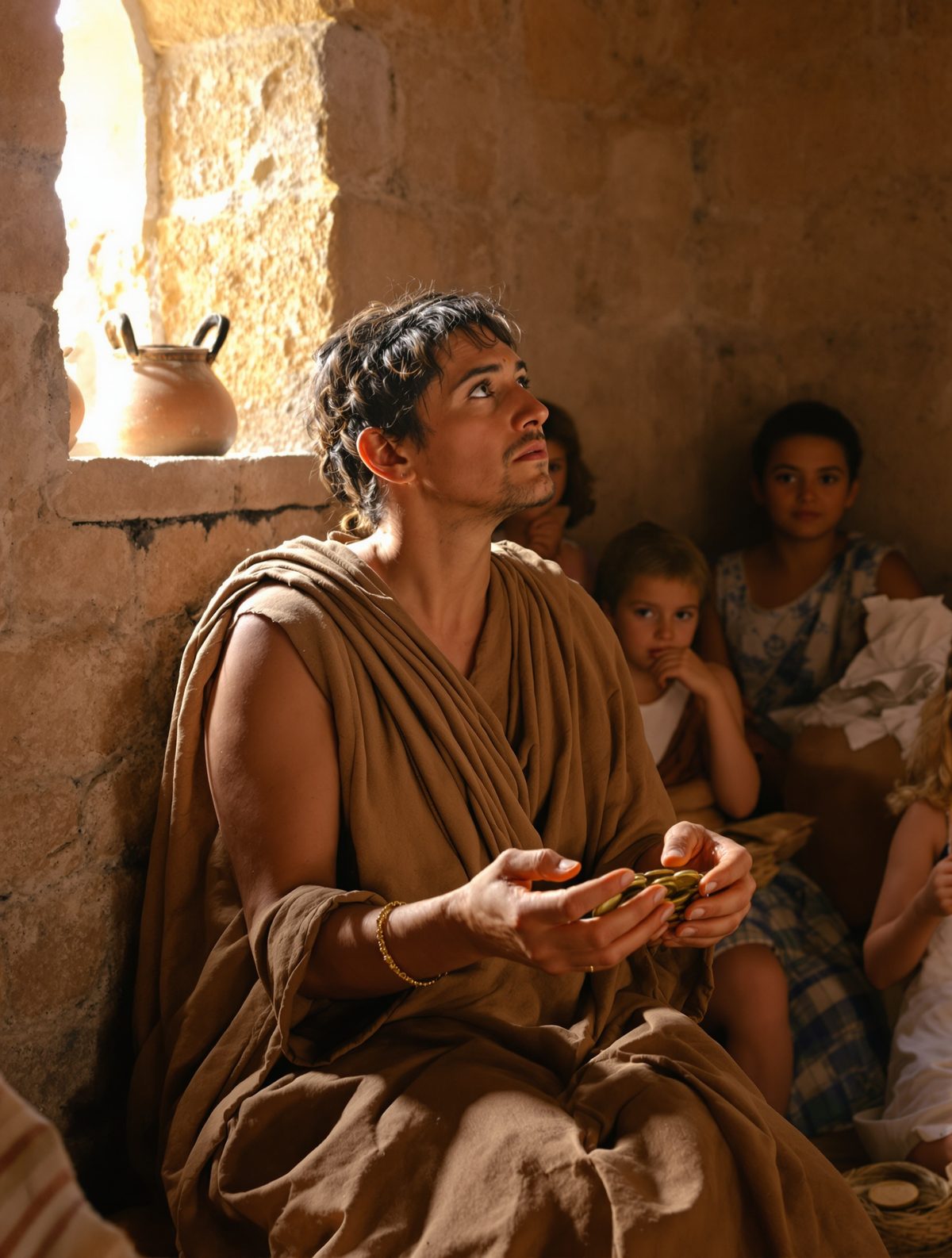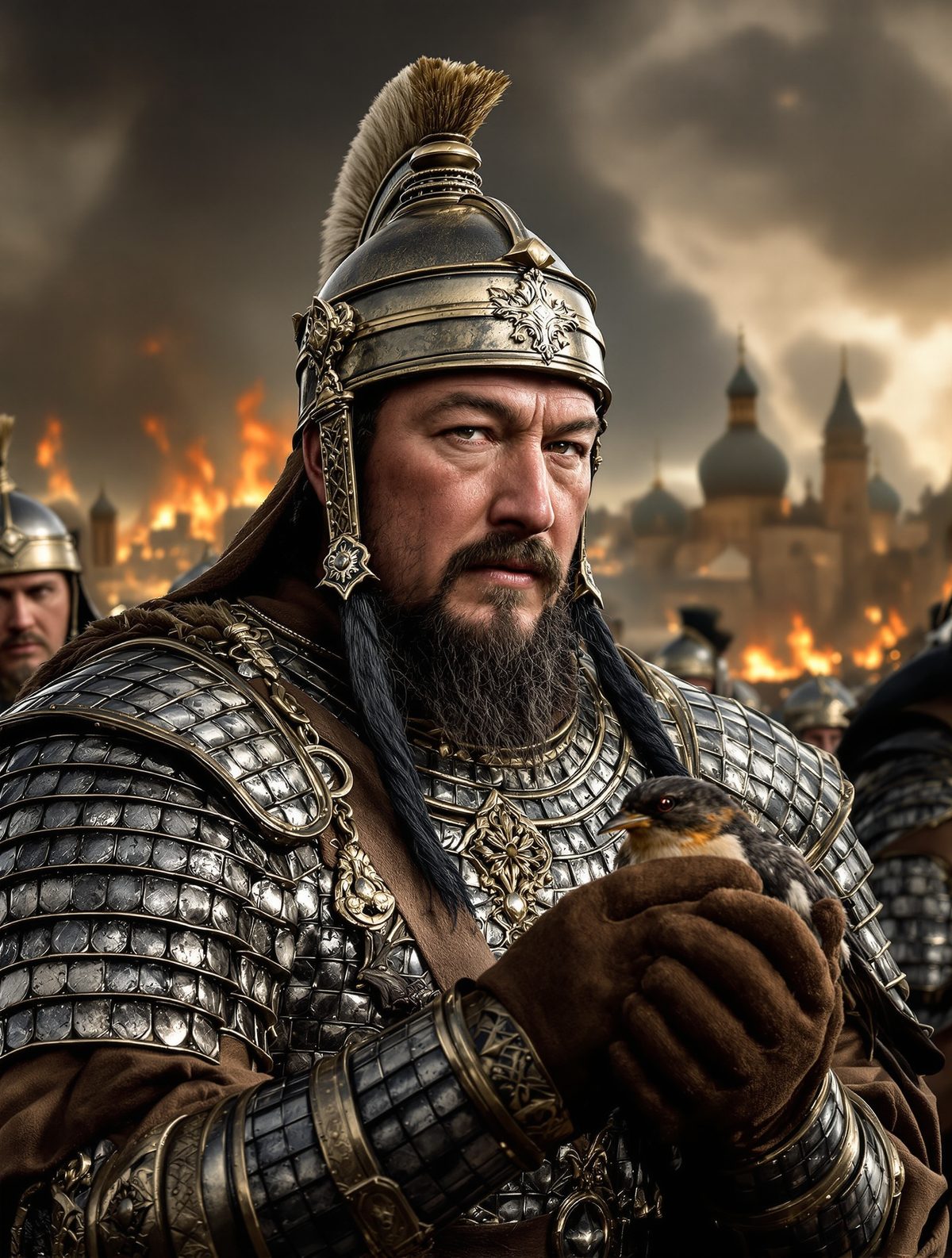
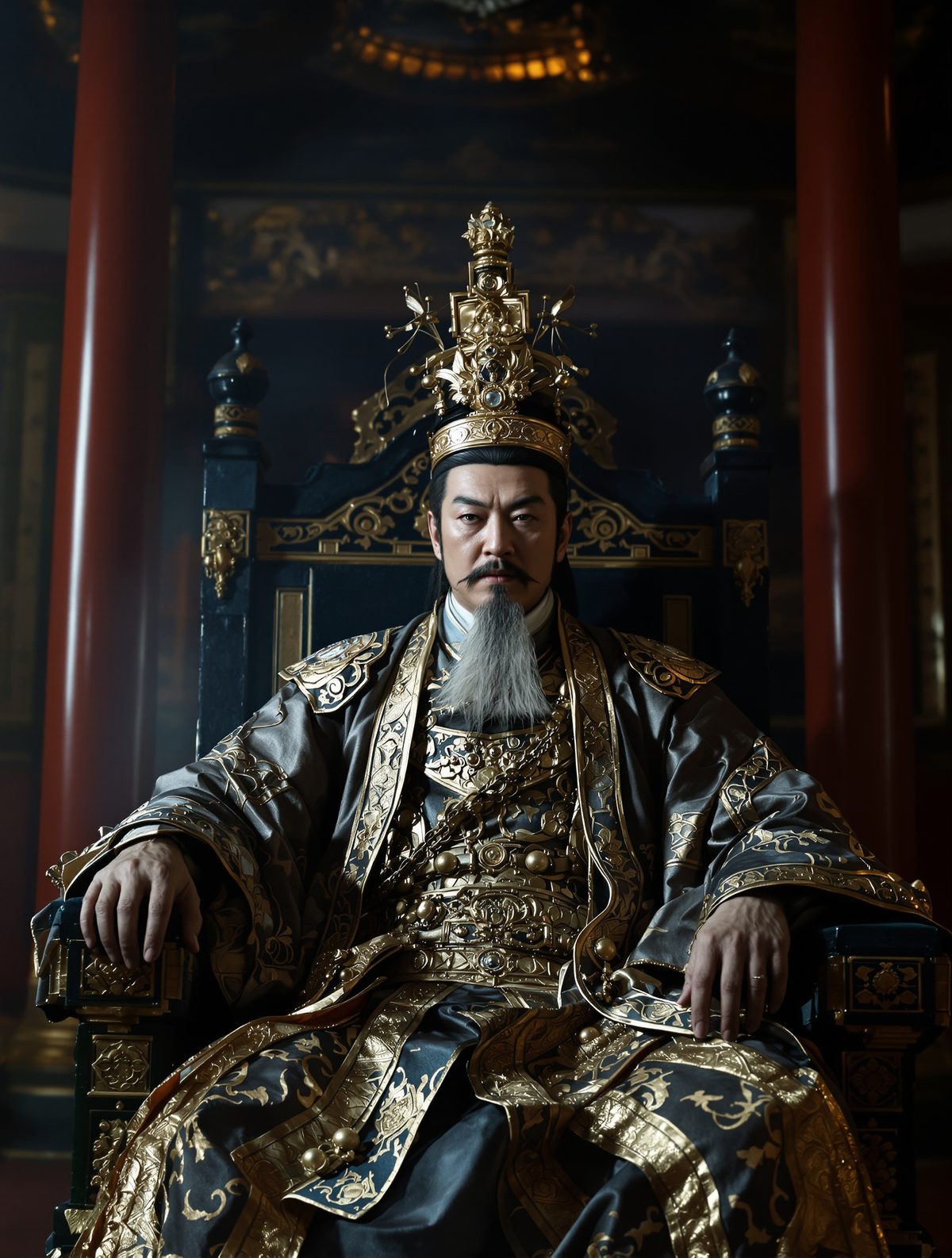
Imagine walking into a throne room where hundreds of human skulls line gilded shelves, their empty sockets seeming to follow your every move. Picture being invited to dinner where your wine cup is carved from a human cranium, and your host casually points out which enemy each skull belonged to. This wasn't a scene from a horror movie—this was everyday life in the imperial palace of Emperor Gao Yang, one of history's most deranged rulers, who transformed his seat of power into a grotesque monument to death in 6th century China.
In 550 AD, as Europe stumbled through its Dark Ages and the Byzantine Empire struggled to maintain Roman traditions, China was fragmenting into a chaotic period known as the Northern and Southern Dynasties. It was during this tumultuous era that Gao Yang seized control of the Northern Qi Dynasty and began his six-year reign of terror that would shock even the violence-hardened court officials of medieval China.
The Making of a Monster: Gao Yang's Rise to Power
Born as Gao Yang in 529 AD, the future emperor wasn't originally destined for the throne. He was the second son of Gao Huan, a powerful military commander who had effectively controlled the Eastern Wei Dynasty from behind the scenes. When Gao Huan died in 547 AD, his eldest son Gao Cheng inherited his father's position as the power behind the puppet emperor. But fate—and an assassin's blade—had other plans.
In 549 AD, Gao Cheng was murdered by a disgruntled servant, leaving 20-year-old Gao Yang to inherit not just his brother's political position, but also his burning desire for revenge against a world full of enemies. Unlike his more politically astute father and brother, Gao Yang possessed a cruel streak that would soon manifest in ways that horrified even his closest allies.
The young warlord wasted no time consolidating power. In 550 AD, he deposed the last Wei emperor and declared himself founder of the Northern Qi Dynasty, taking the imperial name Emperor Wenxuan. But rather than content himself with traditional displays of imperial might, Gao Yang began implementing what can only be described as a systematic campaign of psychological warfare through interior decorating.
Palace of Horrors: Decorating with the Dead
The transformation of Gao Yang's palace began almost immediately after his coronation. As reports from Tang Dynasty historians later recorded, the new emperor ordered that the skulls of his defeated enemies be carefully cleaned, polished, and arranged throughout his throne room on specially constructed golden shelves. These weren't just anonymous war trophies—each skull was meticulously labeled with the name and crimes of its former owner.
Court chroniclers describe walking into the main audience hall and being confronted with over 300 human skulls, their bone surfaces gleaming with a lacquer treatment that preserved them indefinitely. The emperor had artisans craft special holders that positioned each skull at eye level, creating the unsettling sensation that visitors were being watched by an army of the dead.
But Gao Yang's macabre decorating scheme went far beyond mere display. He commissioned skilled craftsmen to transform the largest and most well-preserved skulls into functional drinking vessels. The craniums of his most hated enemies were carefully hollowed out, lined with precious metals, and converted into wine cups. Historical accounts describe these ghoulish chalices being inlaid with gold and adorned with precious stones, creating objects that were simultaneously priceless art and deeply disturbing reminders of the emperor's cruelty.
Perhaps most shocking of all was Gao Yang's treatment of the skull belonging to his predecessor, the last Wei emperor Yuan Shangjian. After executing the deposed ruler, Gao Yang had his skull gilded and placed on a pedestal directly behind the imperial throne. During formal audiences, visiting dignitaries would be forced to conduct their business while staring at the golden death's head of the previous dynasty's last emperor—a not-so-subtle reminder of what happened to those who opposed the Northern Qi.
Dinner with the Damned: Court Life Under a Mad Emperor
If visiting Gao Yang's throne room was unsettling, being invited to dine with him was pure psychological torture. The emperor delighted in hosting elaborate banquets where guests were served wine in skull chalices while surrounded by his bone collection. Contemporary accounts describe the emperor's dinner parties as exercises in sustained terror, where court officials never knew if they were dining as honored guests or potential additions to the skull collection.
During these macabre feasts, Gao Yang would regale his terrified dinner companions with detailed stories about each skull's former owner. He would pick up a cranium, run his fingers along its surface, and describe in vivid detail how that particular enemy had died. Sometimes he would even reenact the execution, using chopsticks to demonstrate sword thrusts or showing how he had personally strangled a victim.
The emperor's favorite party trick involved forcing guests to participate in toasts using the skull cups. He would raise his own cranium chalice—reportedly carved from a rival general who had dared to question his military strategy—and demand that his guests follow suit. Those who hesitated or showed disgust would find themselves marked for potential execution, their own heads potentially destined for the next dinner party's drinkware.
Court records indicate that several officials attempted to decline these invitations, claiming illness or urgent business elsewhere. Gao Yang's response was typically direct: attendance at his dinner parties became mandatory for all high-ranking officials. Missing a banquet without the emperor's explicit permission became grounds for execution, ensuring that his audience for these displays of necrophilic pageantry remained captive.
The Psychology of Terror: Method Behind the Madness
Modern historians have debated whether Gao Yang's skull obsession stemmed from genuine mental illness or calculated political strategy. Evidence suggests it was likely both. The emperor's behavior exhibited classic signs of what we might today recognize as psychopathic tendencies, but his bone palace also served a chillingly effective political purpose.
In the fractured landscape of 6th century China, where regional warlords constantly plotted against central authority, Gao Yang's skull collection sent an unmistakable message: opposition meant death, and death meant eternal humiliation. The sight of hundreds of enemy skulls demonstrated not just the emperor's willingness to kill, but his commitment to desecrating his victims' remains—a fate that traditional Chinese beliefs held to be worse than death itself.
The psychological impact on court officials was exactly what Gao Yang intended. Historical records show that during his six-year reign, internal rebellions were remarkably rare compared to other dynasties of the period. While external enemies continued to threaten the Northern Qi's borders, the imperial court itself remained largely subdued, terrorized into submission by their skull-obsessed ruler.
Yet this same terror that kept his court in line also isolated Gao Yang from potential allies. By 556 AD, the emperor's behavior had become so erratic and disturbing that even his closest supporters began quietly distancing themselves. The bone palace that had once symbolized his absolute power was gradually becoming his prison, surrounded by enemies both living and dead.
Death Comes for the Bone Emperor
On a cold morning in 559 AD, Emperor Gao Yang was found dead in his beloved throne room, slumped among his collection of skulls with a dagger protruding from his chest. The official court record claimed he died of illness, but palace rumors told a different story—that he had been assassinated by his own guards, who could no longer tolerate serving a master who dined with the dead.
The irony of his death location was lost on no one. The man who had surrounded himself with the remains of his enemies had finally joined them, his own skull destined to become just another trophy in someone else's collection. His successor, Emperor Xiaozhaodi, immediately ordered the bone palace dismantled, but not before adding one final skull to the collection—Gao Yang's own cranium, briefly displayed as a warning before being buried with traditional honors.
The Northern Qi Dynasty itself wouldn't survive much longer. Weakened by internal strife and external pressures, it fell to the Northern Zhou in 577 AD, just eighteen years after Gao Yang's death. Historians later suggested that the psychological trauma inflicted by the bone emperor's reign had left lasting damage to the dynasty's stability, making it vulnerable to conquest by more conventionally ruthless neighbors.
What makes Gao Yang's story particularly chilling isn't just the grotesque nature of his skull collection, but how effectively terror can be weaponized by those in power. His bone palace stands as a reminder that the line between civilization and barbarism can be frighteningly thin, and that absolute power in the hands of a disturbed mind can create horrors that echo through history long after the perpetrator is gone. In our modern age of global connectivity and instant communication, it's worth remembering that the human capacity for both cruelty and the normalization of that cruelty remains as real today as it was in 6th century China.